EXPERIENCE ENCANVAS IN 60-MINUTES!
We’re always happy to walk you through Encanvas no matter where you are in the world.


We live in a data driven business world. How do you tap into yours?
It’s thought Jeff Bezos was the first person to use the term Innovation Value Management (IVM) to describe data as a business asset based on its contributory value. If it wasn’t Jeff, then it was probably one of his team. Amazon is passionate about the value of its data. The company leadership team knows that capturing rich insights on its customers—their buying preferences and behaviors—offers an unrivalled competitive advantage.
When organizations shape their management approach to use data every day to make decisions, they are often described as operating a data driven culture. Organizations want to maximize the value of their data by using it to make business decisions. It’s never been more possible thanks to cloud computing and big data. And yet, the secret of driving business success through data often has more to do with the attitudes and skills of your people, than the technology they use.

Businesses that transition decision making to be evidence based, need curious minds to power change. Individuals at all levels of the enterprise must as the question ‘Why’ more often, and have data and analytical tooling at their disposal that equips them to rapidly find answers to those questions. In the digital age, a spreadsheet doesn’t quite cut it. You will need data harvesting and visualisation tools. More over, you will need data to be organized correctly in the first place, and probably cleansed of impurities. This is where low-code software apps come in.
Many of the new executive roles are analytics based. For example, in the office equipment industry, the transition to data-driven business has led many vendors to appoint Service Managers with an analytical background where previously, these roles were fulfilled by ‘the best field service engineers.’ Such roles today are largely about understanding patterns in data, managing people, and acting on escalations.
The latest research from Gartner suggests that, by 2023, data literacy will become an explicit and necessary driver of business value, demonstrated by its formal inclusion in over 80% of data and analytics strategies and change management programs.

Data has become the lifeblood of enterprise. Executive management teams are taking more of an active ownership role in BI initiatives than ever before. Once the bastion of large corporations—because they were the only community of business able to afford the extremely high price tag—business intelligence has become democratized over the last decade thanks to affordable ‘pay-as-you-use’ applications and cloud-based technologies that scale accessibility and affordability to dashboarding and data warehousing tools. What low-code software apps do is fulfil the ambition that many executives to further democratize business intelligence to every stakeholder in the enterprise, and potentially beyond it.
Creating a data driven ‘curious’ culture will help your business to understand customer behavior, react to market changes faster than your rivals and eliminate the unknowns. What organization would not want these abilities?

Armed with a new set of ambitions, organizations are establishing leadership roles to drive the transition of people, process, technology and data to evolve a data driven culture. The Chief Data Officer (CDO) role is growing in popularity as a standard bearer. According to the latest research from Gartner, this role is intended to:
In a digital era, businesses operate on data. Much of their opportunity is programmed into inbound marketing schemas and their operational performance depends on data analytics to execute hundreds of decisions based on fact—not gut-feel—to fine-tune internal processes and minimize sales costs. To create a data driven culture requires a culture change in many management teams that are accustomed to driving their business based on ‘hunches’ and ‘best guesses’ over what customers value and what they want. A digital economy means that enterprises no longer need to guess.
Jeff Bezos, the founder of Amazon is quoted as saying, “If you don’t understand the details of your business you are going to fail.”
The most commonly reported barriers to a data driven culture are:

The transition from analog to digital business behaviors has been swift; a matter of a few years. Many enterprises find themselves on the wrong side of this wave, operating without good customer, product, business or market insights. They find their operations somewhat sluggish compared to the ‘SaaSy’ new-kids on the block. Executives know, curious minds are needed to fast-track change at every level of the organization.
Attitudes to data vary across businesses. Leaders generally see it as crucial and an opportunity, while many departmental leaders find it a tantalizing prospect that’s probably out of reach. IT leaders, on the other hand, see data as a problem and a risk. And there will be many that see the surfacing of operational data as a risk, given that it might expose their underperformance. Bringing everyone on the same page will not be easy, but it is necessary to remain competitive in a digital economy.
Creating a data driven culture is a change project like any other. To be successful, your business needs to be armed with the same state-of-the-art methods and tools that your competitors will be using. Nothing less will do. That means harnessing robotics and artificial intelligence, analytical visualization tools, predictive modeling and automated escalation routines.
Unfortunately, when considered in isolation, none of this technology will actually help your business to harvest its opportunity and grow. Like most changes in business, it will take a blend of ‘people, process, data and technology’ to become a successful data-driven enterprise—and the need to change attitudes and behaviors will as always take center-stage.

Ian Tomlin is a management consultant and strategist specializing in helping organizational leadership teams to grow by telling their story, designing and orchestrating their business models, and making conversation with customers and communities. He serves on the management team of Encanvas and works as a virtual CMO and board adviser for tech companies in Europe, America and Canada. He can be contacted via his LinkedIn profile or follow him on Twitter.
Now read:

Without data, you’re just another person with an opinion
W. Edwards Deming, American Statistician
Data matters and it’s central to digital transformation. The problem is no matter how much companies invest in their data, and however they capture it, the quality will always be suspect. Without data, any ideas of digital transformation are likely to be a pipe dream. Low-code is transforming the ability of organizations to create custom apps to cleanse, organize and use their data.
Most companies hoard gigabytes of data on their finances, their products, their customers and markets. The difficulty is that almost no enterprise has its data organized in a structure that makes it easy to access. As soon as business leaders come up with ideas for business model re-invention, probably the next thought in the minds of DevOps leaders is ‘Where is the data coming from?’
Digital transformation projects have a habit of either generating new data (as in the case of sensor network-centric projects) or re-using old data (such as plotting assets or customers on a map and gaining value from location-centric perspectives), or a blend of the two. Re-using data found within the enterprise can be challenging because of data quality issues, the variations of data structures and field formats between applications, and issues getting data out of systems. This means DevOps teams need to have very good data management skills. Low-code platforms offer a smart new way for these teams to harness data that is close by but remains out of reach
How should DevOps teams approach their data challenges? Here are 10 ways DevOps teams are using Encanvas to breathe new life into their old data.
Old data may be held in various applications and formats. It’s not uncommon for Encanvas to gather information from spreadsheets, big back-office systems databases like SAP R3, IBM DB2, Microsoft Dynamics and SQL – all at the same time. Encanvas is a plug-and-play multi-threaded and multi-sourcing platform which means designers can create concurrent live data feeds from multiple systems or end-points at the same time. This capability is used extensively by designers when creating applications that re-use data from existing and new systems together, creating new data structures on the fly for the specific canvases they author as part of applications under development.
Your old data may require filtering to select only the records relevant to your project. A powerful feature built into Encanvas’s mashup environment is our special filter which allows designers to employ drag and drop controls to instantly create very powerful data filtering on inbound data from third party sources. Any number of filters can be applied to tables at the same time. For example, if a designer wants to only ingest data from a customer table of a specific type, and that relates to a specific region, they can create special filters for ‘types’ and ‘regions’ selecting only the records that apply to those conditions. All of this rich configuration is done without any coding and doesn’t influence the integrity of the ingested table, or the potential re-use of data in its native form by other applications (or canvases).
Old data may be held in various applications and formats. It’s not uncommon for Encanvas to gather information from spreadsheets, big back-office systems databases like SAP R3, IBM DB2, Microsoft Dynamics and SQL – all at the same time. Encanvas is a plug-and-play multi-threaded and multi-sourcing platform which means designers can create concurrent live data feeds from multiple systems or end-points at the same time. This capability is used extensively by designers when creating applications that re-use data from existing and new systems together, creating new data structures on the fly for the specific canvases they author as part of applications under development.
If your old data can benefit from being enriched by other sources of data, Encanvas’s mashup capabilities can really bring value by making the internal and external data accessible to applications designers without having to use coding or API to build new integrations.
Sometimes old data requires cleansing at the point of transfer from its original location using a machine to machine cleansing and transforming process to shed unwanted data and apply transformation rules to re-order, de-dupe and re-locate data to new data structures. Encanvas Software Robots make possible machine-to-machine integrations. They equip designers with the means to configure ETL actions and normalize data before it gets ingested into applications. Our software robots also automate the generation of notices to alert designers (and users too if necessary) that transformations have worked – or not. Transformations can be triggered by events, scheduled times, watch folder changes and a variety of other means.
A powerful (and pretty unique) feature of Encanvas lies in its ability to create quarantining protocols for old data that fails to live up to your expectations for data integrity. There are few good reasons to upload records that are unfit for purpose. If you are gathering customer records for example and would determine that records that fail to have any contact email, telephone or mobile numbers included are not suitable for use, then designers can create quarantining rules that filter this data out for special treatment. In such cases, the data remains ‘in the system’ but is no longer visible to users until it has been manually or machine cleaned.
It may be that old data is being ingested from multiple systems or end-points and you need to create a new data mart that has to prioritize the best likely source of good quality data over others. This can get really complicated because different systems may create new data at different speeds and this can create latency issues but, nevertheless, Encanvas has the codeless tooling to enable designers to author voting systems to vote on which source is most trusted. Voting systems can use algorithms to automatically test data integrity and then automatically augment the voting structure, or they can be manual, where the data owner or manager uses a sliding scale of trust levels to determine which source is proving to generate the best results (or both!).
When there are gaps in your old data, there are many ways that Encanvas can create new data as part of its application design. For example, the numeric controls of Encanvas allow designers to create formulas and calculations on data to total columns, sum value, source averages etc. that may be required for your new dashboards and reports but do not exist in the ingested data. Encanvas also has the ability to ingest SQL script and DLLs to make it easy for DevOps teams to re-use existing code blocks or create new APIs and transformations.
Another way to create new data is by using Encanvas’s mapping capabilities to apply location-data to existing addresses and locations. Encanvas has an integrated – and codeless – mapping engine (sometimes referred to as Geo-Spatial Intelligence, or ‘GIS’). It allows designers to plot and pin records on maps. The geo-data of records is added to the data-set (companies like Google and Microsoft charge lots of money to do this!).
Parachute in a high profile technology-centric team with a strong leader into an organization with an existing IT department it’s hardly surprising that you’re going to have to put out some fires and smooth over a few ruffles.
Balancing two-speed IT means having an internal IT team focused on reducing costs and improving process efficiencies through Business Transformation (BX) and a DevOps team re-inventing business models through Digital Transformation (DX) in tandem. Recognizing each team for its own skills and contributions to business outcomes and balancing praise is going to be important for a healthy culture.
We’ve saved the most dramatic way of fixing old data quality issues until last – because it’s no small project to build a new data warehouse to gather and re-organize data into new structures but sometimes it’s the most sustainable way to ensure that data integrity is preserved for the life of your application. For mission-critical processes, it’s probably the best quality outcome although the time and investment needed to create a data warehouse or enterprise data-hub are definitely ‘none trivial’. Encanvas includes all of the codeless tooling needed to fast-track the creation of new data warehouses and data marts using the data repository of your choice – whether you are moving towards a big data solution like Hadoop or are seeking a more traditional data structure like SQL or DB2.
So there you have it – ten ways Encanvas Low-Code can help you to turn old data into useful data for your next digital transformation.
To find out more about the capabilities of the Encanvas Low-Code platform, please contact our team.

Author
Francesca is an independent writer and head of communications for technology brands. Armed with a passion for writing about innovative technologies that can transform business, she serves on the management team of Encanvas and also works as a consultant and advisor to the executive teams of PrinSIX Technologies, Answer Pay and INTNT.AI, helping to rethink their marketing in order to tell their brand story. She can be reached via LinkedIn.

In its 2019 FutureScale outlook focusing on ‘Digital Supremacy’ IDC argued that operating as a software-driven “digital innovation factory” will be at the core of an enterprise’s ability to sustainably differentiate and compete in its own industry.
They suggested that, by 2025, nearly two thirds of enterprises will be prolific software producers with code deployed daily, over 90% of apps cloud native, 80% of code externally sourced, and 1.6 times more developers than today.
Watch any ad break on the TV and you will see 4 in 5 ads promoting apps or showing someone using a smart device. The world has gone mad for smart devices, AND APPS.
Why are so many companies becoming no-code software app factories?
A clue comes from McKinsey & Co. in its paper published in August 2020 titled, ‘The Next Normal—Digitizing at speed and scale’ where the management consulting and analyst firm suggests the recovery will be digital. They write, ‘The COVID-19 pandemic has heightened the need for companies to adopt digital business models—and only cloud platforms can provide the agility, scalability, and innovation required for this transition. Although there have been frustrations and false starts in the enterprise journey to the cloud, companies can dramatically accelerate their progress by focusing investments in it where they will provide the most business value and by building cloud-ready operating models.’
No business today can ignore the importance of transitioning incumbent slow-burn enterprise systems towards an agile, cloud-born, no-code software platforms that serve the information management demands of all stakeholders.
There are two major drivers of this move to no-code software. They are:

The pace of change in markets is unprecedented. It means laggards are no longer ‘just slow’ and missing out on opportunities. Without a place in the digital future, companies face extinction. According to research conducted by PWC in 2019 and 2021, around 1 in 5 surveyed companies (18%) implemented some form of Artificial Intelligence in 2019, but that dropped to 4% in 2020 when the pandemic gave businesses something else to think about. 2021 is likely to be the rebound year when businesses accelerate their digital plans to innovate their way out of the economic slowdown.
Frank Gens, Senior Vice President and Chief Analyst at IDC, argues, “As more than half the global economy turns digital by 2023, a new species of enterprise will be required to compete and thrive. IDC’s 2020 predictions show that enterprises will prepare for the digitized economy by accelerating investments in key technologies and new operating models to become hyperspeed, hyperscaled, and hyperconnected organizations.”
For many industries, customer aspirations have changed in the past year. Some businesses will be impacted by the raising demand for PPE and medical products. Others will have to deal with the consequences of more home working that reduces foot-fall in major commuter cities. Covid-19 brought the travel and tourism industry to its knees. Office space will drop in demand and value. And ANY business not already trading successfully online will need to get their act together in 2021. Those, however, are the top-line impacts. Consider too that consumers have reset their perspectives on what’s important. The pandemic has raised questions in the minds of buyers in the efficacy of a wasteful consumer society. Re-cycling, re-use, and business models framed around protecting the planet will trump behaviors that promote excess and extravagance.
Every business will face its own unique blend of challenges, and to counter them, the solution is to create a technology ecosystem that maximizes customer value and experience, while minimizing cost. Unfortunately, that doesn’t just come out of a box in a form executives can plug in—it needs to be crafted and deployed.

The modern no-code software app factory relies on a partnership between the IT team and ‘the business’ comprised of Line-of-Business (LoB) managers, execs and application stakeholders (which could be employees, contractors, customers, suppliers, industry partners, shareholders, etc.).
To herd the cats, you will also need a Project Manager to drive the ideation process. Additionally, a Business Analyst should be on hand to create the apps using a modern codeless Integrated Design Environment (Today, the app creation role has shifted away from the tech-stack deployment, scaling, backup and architectural considerations, and the operational governance responsibilities of IT).
Bringing these disparate interests together is the role of the FUSION TEAM. This is a transitional decision making ‘meeting of minds;’ where stakeholders come together to agree what should be built, how it should be deployed, and what people, process, technology and data considerations need to be thought about to make any app deployment a success.
The technology toolset will be a no-code application Platform-as-a-Service (aPaaS) of one form or another, deployed on a private cloud by the vendor. Expect to find in your tool-kit the Integrated Development Environment (IDE), together with data management and governance tools, heaps of data security, and the necessary data crunching and integration tools needed to harvest data from existing and third party repositories. It’s worth noting that almost no application exists as an island these days. Inevitably, your apps will need to harvest and serve up data to third party tools. With modern tech-stacks, this is normally achieved using codeless data connectors, so whilst still not a trivial task, it is surprisingly simpler than using APIs and third party integration platforms and tools.
How companies think about their enterprise stack has been slow to change. Company IT teams were educated to code and script. They have invested hours of their lives in learning the systems and tools your business uses today. Asking them to forget all that and adopt a new approach and set of skills is a big ask. Therefore, managing change is best done by bringing in some fresh thinking, either from a third party, or by hiring a Digital Officer familiar with the latest generation of cloud-born no-code software application ecosystems—such as Appian, ServiceNow, Encanvas, Outsystems, BettyBlocks or force.com.
Transitioning to become an APP FACTORY is a people, process, data, and technology transformation—and it’s never easy eating an entire pizza in one serving. For businesses that have yet to transition to FUSION TEAMS and NOCODE development, the likely starting point is to find a technology partner able to advise on how to progress.
The good news, is that no company has to be left behind. Every opportunity exists to get on the band-wagon and to build up your capability to develop a digital ecosystem to build agility into your tech-stack and orchestrate your business model one app at a time.
Looking for enterprise-grade no-code software for YOUR app factory? To experience ENCANVAS for yourself, book a test drive.
Author
Francesca is an independent writer and head of communications for technology brands. Armed with a passion for writing about innovative technologies that can transform business, she serves on the management team of Encanvas and has worked as a public relations adviser to the executive teams of various companies including Newton Day Ltd, TwoMinute Reads.com, NDMC Consulting, PrinSIX Technologies, and Answer Pay helping to rethink their marketing in order to tell their brand story. She can be reached via LinkedIn.
Now read:

It’s about the small things. The ease at which, as a customer, you can apply for a loan, register for a service, pay a bill. These are characteristics of ‘the craft’ of running a digital business that sets businesses apart from their rivals today.
For the most part, the customer experience improvement agenda has shifted from the very front-of-shop to the no-mans-land space that resides between websites and back-office systems that power common core business processes. No-code digital transformation makes all this possible.
Note: There are some exceptions to this rule. 3D visualization of products is one of those; where customers today, in search of a richer online shopping experience, are finding value in solutions that empower them to personalise their own products using powerful 3D imagery and thoughtfully designed product feature selection journeys.
Read how firms are using 3D to drive customer engagement here.

No-code platforms aid digital transformation. It’s about what Dave Brailsford (the coach that took the British Cycling team to Olympics success and, in doing so, made history) called marginal gains. This means bringing attention to detail on the customer experience that applies ‘1% improvements’ to every nuanced step of the customer experience. This, to ensure that customers can find and get to what they want faster, simpler, better. no-code platforms equip IT teams to build apps as quickly as departments need them, with each app tailored to the needs of customer audiences.
Some examples of this? How about offering customers the ability to use their Facebook and Google accounts to register for a service, providing a voice bot to answer questions without asking customers to type anything into a form, or giving customers the ability to track delivery from order placement to the door!
As mentioned, while the focus of the customer experience started with swishy websites and intuitive landing pages, competition has driven customer experience into the back-office nowadays. The challenge for some organizations is that more often than not, back-office processes are powered by slow-burn enterprise IT systems or, worse still, spreadsheets and SaaS tools that aren’t good bedfellows.
What is a Customer Experience Strategy? Learn here.
What we’re seeing presently in some industries—like financial services and retail—could be best described as a digital innovation gold rush. There are so many places where new forms of digital technology can fashion a small improvement that capable firms are employing internal fast-track tech teams to grab fistfuls of this new goody bag of tech to start eradicating human-in-the-loop process steps.
While there’s no lack of enthusiasm in these teams, areas to improve, and no shortage of tech to innovate with, there are challenges. These mostly originate from leadership teams uncomfortable with change, officers that might be viewed by some as conflicting priorities—such as to protect the business continuity risk profile of the business, and the time immemorial cultural and behavioral barriers that hamper any enterprise change.
Fusion teams are displacing DevOps teams to upscale digital innovation in the enterprise. Learn more here.
Another drawback to innovating customer experience in the back office is how data and processes are managed today. As dev teams look to gather existing and third-party data together, they frequently discover that data quality is not what it should be in enterprise IT. Furthermore, a splurge of new SaaS tools adopted over the past decade, means there is no unified ecosystem of data in place; no single version of the truth for important data tables that determine organization structures, process designs, roles, policies, user groups, etc.
no-code platforms speed to market as much as anything else. Blend speed to market with ‘best-fit’ and you have all the IT ingredients you need for a successful digital rewiring of your business.

Where the state of the art in customer experience innovation is moving to a new battleground for technology in the clouds. Digital leaders know they can innovate faster, and show meaningful returns, only when they can truly harness enterprise data to show meaningful improvements. This is causing digital leaders to explore smarter ways to make sense of customer data (learn about Customer Data Platforms here), harvest data; and build applications designed to perfectly fit customer experience needs.
Enterprise no-code Application Fabrics are cloud platforms used to create a unifying digital canvas across your enterprise to interplay between internal systems and the bigger digital world. These ‘as a service’ cloud platforms leverage data from pretty much everywhere and bring together data management, applications design, and operational governance into a single technology toolkit. The dedicated players in this market, each offering varying stages of maturity include Encanvas, Appian, OutSystems, Mendix and ServiceNow, with further solution alternatives being provided by the leading enterprise platform providers, including Microsoft, Oracle, and SalesForce.com. The general direction of travel promoted by these vendors is to hyper automate back-office processes and cut operating costs while improving customer experience.
No-code platforms represent a new genre of enterprise software formed around low-code or no-code principles whereupon the design of applications, and much of their deployment effort is augmented without the need for scripting and coding skills. This means applications can be developed rapidly, by small teams of IT and business stakeholders (a.k.a. Fusion teams), and deployed at scale by IT architects. Design look and feel aspects are pre-determined by enterprise IT user experience teams to ensure that applications designers need only focus on the 40% of app characteristics and data dependencies that are truly unique to the app being created.
Businesses are moving to no-code platforms from the previous soup of SaaS solutions, slow-burn enterprise core business systems, and spreadsheets to fill and automate the void between websites and delivery systems. They are making a choice to make their processes ‘different’ to competitive rivals, instead of accepting the vanilla process enablement solutions that came before, to make every enterprise work in the same way.
It means that tools such as chatbots, AI-based decisioning, sensor networking and IoT technologies, blockchain, 3D visualization and virtualization, software bots, and other modern digital componentry can be ingested into business processes without major re-wiring.

No-code digital transformation and the adoption of enterprise-wide no-code applications fabrics makes for a very different kind of competitive advantage. Advances in the enterprise architecture like this—that meld data organization with applications design into a single toolkit that spans all enterprise activities—present new agility opportunities for customer experience chiefs. It means they can make substantive enhancements to processes over time, and implement them faster, at a much lower cost of change. Using no-code editing of applications—and fusion teams that harvest ‘how-to’ knowledge from the business stakeholders that really know their subjects—leaders now have the means to constantly tweak every cog in the customer experience until it is performing to its optimum.
Of greater importance perhaps is this: the use of software bots means that every step of the customer journey is recorded as digital data insights that can be used to expose new customer value, buying trends, expose process bottlenecks and shortfalls; to ultimately create smarter, more automated, and more competitive businesses.

Author
Ian Tomlin is a marketer, entrepreneur, business leader and management consultant. His passion is to help make great ideas happen. Relentlessly optimistic about the potential of technology for good, Ian’s 30+ year career has focused around the intersect of strategy, technology and marketing. He writes on subjects including enterprise computing and organizational design. He also works as a consultant and advisor to the executive teams of PrinSIX Technologies, Answer Pay and INTNT.AI, helping to rethink their marketing in order to tell their brand story.
Ian has founded a series of successful businesses including NDMC Ltd (2003), Encanvas (2006), and Newton Day Ltd (2019). He has written books, articles and guides on brand, digital transformation, enterprise applications, data science, workforce management, and organizational design. He can be reached via LinkedIn or Twitter.

Every business manager today has a mind brimming with ways to improve their business best served by developing self-authored custom apps. How can no-code software development produce professional, safe and scalable solutions that integrate with your existing back-office

It’s quite remarkable how many fantastic business ideas spring out of moments when leaders and entrepreneurs have time to let their minds wander. Be it in the shower, at the gym, or during the morning walk, inspiration can strike and you find yourself planning out your next great business project.
At one time, you had to be a programmer to turn ideas into software apps. not today. No-Code software development gives every business leader to opportunity to turn their bright ideas into code.
Whether it’s conjuring up a new enterprise, improving a process that saves money, building a new product, or finding ways to deliver giving value to customers, good ideas these days rely on software technology to make them real.
While off-the -shelf apps are perfect for automating those typical processes that every business needs to deal with—accounting, financial management, Human Resources and payroll, staffing, web conferencing etc.—the things that make your business different will need new apps to be authored. That’s where no-code software development comes in.
Think back to Y2K. If you wanted an app, for most organizations, the only way to achieve it was to create an internal coding team, or outsource it to a third-party developer. Both of these resourcing approaches has its issues.
Building an in-house expert team is expensive, time-consuming, and takes time—not to mention the fact that there’s a global shortfall in IT skills. Even when you have the right people, and have invested in the right coding platforms, there’s no guarantee that what gets produced will be what you need. The casebook of failed application development (‘appdev’) projects is littered with examples of companies that have tried and failed to create apps themselves on-time and on-budget with internal teams. No-code software development means every business can afford to create custom apps for their business. Teams are smaller, and IT risks are lowered.
Hiring an external dev team always risks intellectual property. Managing internal teams can be a challenge for managers, and results are always driven by the economics of the project. As soon as the money runs out, the development stops—and this can lead to poor quality results, where all the finishing touches are missing. For me, perhaps the biggest issue however is what happens post delivery. Applications always need adaptation and enhancement over time. With external teams, there’s no guarantee the people that worked on the project will be around when you need them to enhance and improve the apps they develop.
Examples of mobile and web desktop applications designed and deployed using no-code software development

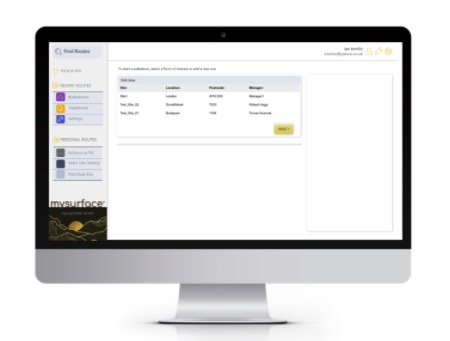
Thankfully, there is a new THIRD WAY to get your app produced and published that brings with it reduced problems post-project, because you will always be able to update the app whenever requirements or markets change. And that new way is an Enterprise App Platform.
No-code software development is made possible by adopting a no-code application Platform as a Service. This is a cloud platform that equips businesses to design, deploy and run their own apps.
Usually these days, the design aspect of creating apps is democratised by using building-block styled No-Code interfaces , so that business people can get hands-on in specifying and building apps themselves. The design tools are designed for use in workshops in near-real-time, so expect to be able to deliver an app in days and weeks, not months and years.
Deeper, more technical aspects of managing an enterprise app platform are served up with dashboards and tooling designed for IT architects and people that went to college to study computing as a discipline.
Enterprise app platforms are a game-changer for transforming the creative opportunities of business leaders and managers. They equip businesses to go digital and adapt apps to respond to change as often as necessary, without any great cost (or IT) burden.
No surprise then that the market for No-Code and Low-Code Enterprise App Platforms is going crazy at the moment. Gartner is suggesting the global Low-Code/No-Code Development Platform Market will tip $187 billion to 2030.
There are two lurking IT project killers that destroy the hopes and ambitions of sponsors more than anything a development team will or won’t do. They are the two evils of data quality and data integration.
Like lurking evil titans, these two problem areas sometimes seem designed to derail the ambitions of humans. I can’t think of an application of any description that doesn’t depend on any other system for ANY of its data.
This is when the world goes dark. Suddenly, appdev teams find they don’t know how to connect to systems, or at least they don’t know how to connect without risking performance or security impacts on the existing systems.
Every app in existence these days requires the creation of user identities and logins, of company records, connections to order processing or accounting systems. Before you know it, your little no-code app concept must connect to one or many existing or new IT systems. Furthermore, as you harvest data, you will need to de-dupe it, organize it, transform and add data. For that you will need a toolkit.
To connect to one or many systems and harvest elements of data you need for your new app, you will require the following:
No-code data connectors will equip your app to harvest existing data repositories to capture the data you need. Sometimes, this is frowned upon because of the data processing loadings it places on servers. Other time, vendors are reluctant to share their data– so you will also need the next feature.
Software robot workflows (sometimes called Robotic Process Automation, or ‘RPA’ in the industry) will equip your app to harvest data from existing data sources. In circumstances where you cannot connect directly to a data source, another way of harvesting data is to extract a report from a system, or key-fill a spreadsheet template. With this feature, you will be able to upload data from spreadsheets, XML or CSV reports.
Extract, transform and load (ETL) tooling will enable you to clean-up, normalize and adapt your data to fit the new data processing requirement.
A data-mashup capability will equip you with the necessary tooling to blend data from different sources together in new ways.
Poor quality data can make a good app look bad. It can also make an app unusable, or of little value.This is why it’s so important to make sure your Enterprise App Platform comes with the right blend of capabilities, not just to design, deploy and manage apps across your business, but also to help in the resolution of data integration and quality challenges.
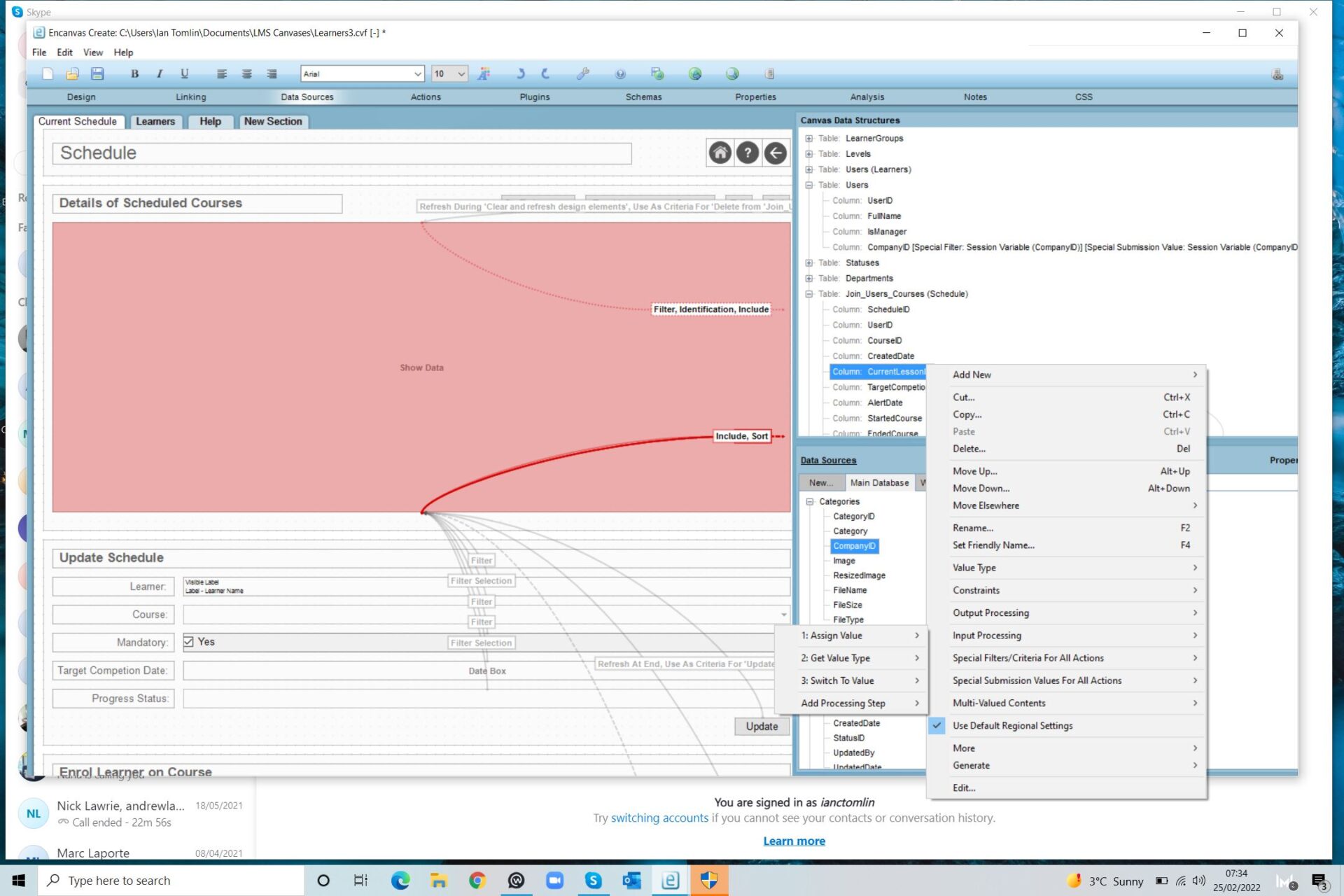
1. Extract, Transform and Load (ETL) tools and bots – This feature allows you to create ways to pump data from different systems (that may be located at different physical locations, or locked behind firewalls) to serve up data from existing systems, to then extract, transform and load it into your new app. Often, this sort of tooling will use if/then logic rules to validate, adapt and enrich data as it is uploaded.
2. Ready-to-Use Data Connectors – This is tooling that connects your app (and the server it sits on) to third-party systems that have data of differing types stored in differing ways.
3. Data Mashup support – This is about blending ‘bits of data’ from one data source, with ‘other bits of data’ from another to populate tables. One key technical aspect of this feature is that it needs to be multi-threading. This describes an ability to keep the data connections in use ‘open’ as needed.
4. Plug-In Support – It’s handy to be able to use third-party app components and data sources as part of new application developments. When using third-party components, app designers will want to be able to act on the data in the native design environment and not have to ‘code’ changes in database systems prior to import. This is where plug-in tools like HYPER-DRIVE from ENCANVAS come in—to de-skill and simplify the task of harnessing IT existing app components.
Ian Tomlin is a management consultant and strategist specializing in helping organizational leadership teams to grow by telling their story, designing and orchestrating their business models, and making conversation with customers and communities. He serves on the management team of Encanvas and works as a virtual CMO and board adviser for tech companies in Europe, America and Canada. He can be contacted via his LinkedIn profile or follow him on Twitter.
Now read:

OXFORD-UK, August 10, 2020 – Encanvas today unveiled the latest version of its Enterprise-Grade Codeless Enterprise Applications Platform. Encanvas/4 makes it possible for the ideas people of an enterprise to create machine-to-machine and human-to-machine apps in workshops using Agile Codeless methods.
The global pandemic has raised demands on businesses to move to online sales and marketing. Business leaders are pressured to closely integrate their websites to back-office systems and orchestrate business models, one app at a time, to maximize customer experience while minimizing operating costs through hyper-automation.
This drive towards use of digital technologies to bring differentiating value to customers, means companies have become app innovation factories. This demand is fuelled a growing Rapid Applications Development tech industry and Low-Code app development solutions estimated to reach 1$46.4 billion by 2026.
Solutions for Rapid Applications Development in the market today target two separate audiences; so-called Citizen Developers that want to create apps themselves but lack coding skills, and IT Professionals engaged in applications development but seeking faster ways to deliver outcomes.
Encanvas/4 has been expressly designed to equip fast growing businesses and large enterprises with a secure private cloud app ecosystem to design, deploy and run as many apps as they need and change them as often as they like. Additionally, it provides the means to integrate existing data repositories and websites with core business systems to create a data driven business able to experience their customer landscape from the first contact to the latest transaction.
Encanvas claims its No-Code approach uniquely breaks down the divide between IT and the business by equipping Business Analysts with the means to support the end-to-end app ideation process, while further empowering IT teams to maintain data security, app deployment, performance, scaling and governance roles. Using Encanvas, businesses can displace self-authored shadow systems and spreadsheets, migrate human-in-the-loop processes to full automation, and simplify their app architectures and data models to cut legacy burdens while increasing data asset value.
With many firms considering or already engaged in digital transformations, Encanvas supplies the app ecosystem and integration-ware to support Hyper-Automation. It promises the fastest time to value while bringing together e-forms, robotic automation (RPA), artificial intelligence (AI), data science, and workflow in one platform.
Encanvas produces improved customer experiences and digital transformations one enterprise application at a time, delivered up to 10 times faster than Low-Code.
Originally launched in 2003, new features in the version 4.0 platform include:
• Live-Wireframing – Technology to design, create and publish ready-to-deploy prototypes without coding or scripting in workshops.
• AppFabric – Technology to manage the formation of private cloud app ecosystems, separating the ideation role duties of Business Analysts from the deep technical roles fulfilled by IT Professionals.
• Hyper-Drive – A Universal Data Plug that means third party code, script, apps or data sources can be fully embedded into Encanvas’s codeless ‘building block’ app ecosystem.
• Web iFrame Integration – Giving app designers an elegant way to integrate Encanvas forms and apps into their existing websites and app portals.
Encanvas/4 is generally available in October 2020.
Encanvas is an enterprise software company and the developer of the Encanvas Codeless Applications Platform. The Encanvas/4 codeless app ecosystem supports applications design, deployment and operation without coding or scripting. It produces enterprise-grade apps and helps change management teams to evolve business IT at the speed of light to maximize customer experience and minimize costs. Build the apps you need and change them as often as you like. Many of the world’s largest organizations have used Encanvas applications to automate, transform and grow. For more information, visit www.encanvas.com.
Source:
1 – Report by KBV Research on the Global Low-Code Development Platform Market.
PRESS AND MEDIA CONTACT DETAILS:
Encanvas
Dove Cottage Offices, Abingdon Road, Marsham, Oxfordshire OX13 6NU, United KingdomTel: 02 3983 7001
info@encanvas.com
Media and Press Contacts:Newton Day Ltd
3rd Floor, 86-90 Paul Street, London, EC4a 2NE
Francesca Manleyfrancesca.manley@newtonday.uk